
Mission
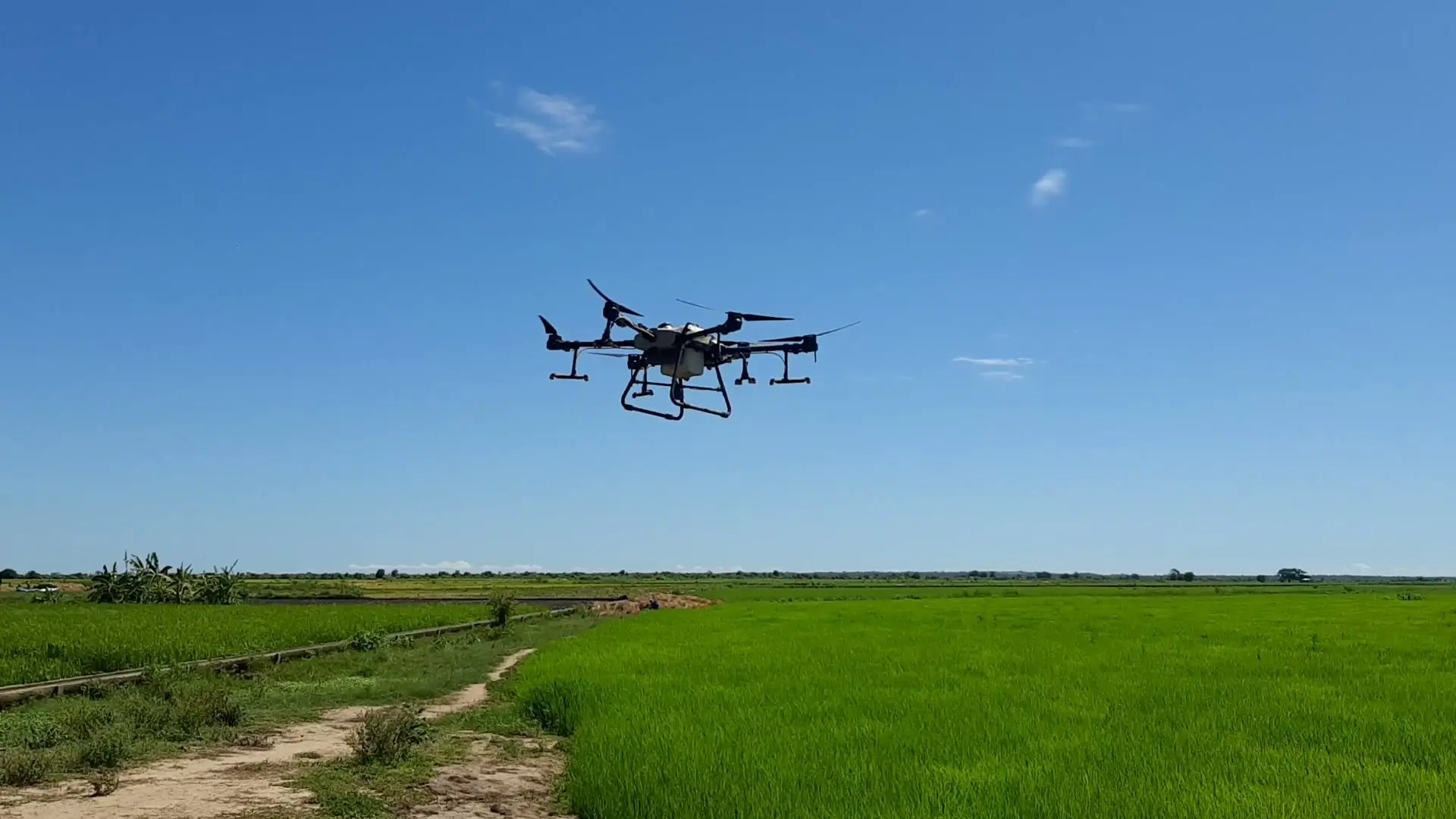
Drone spraying
Find the areas that need treating, then treat them precisely, with less product. We have done this against malaria mosquitoes for the PMI VectorLink programme. We offer the same method against locusts.
Against malaria: the PMI VectorLink programme
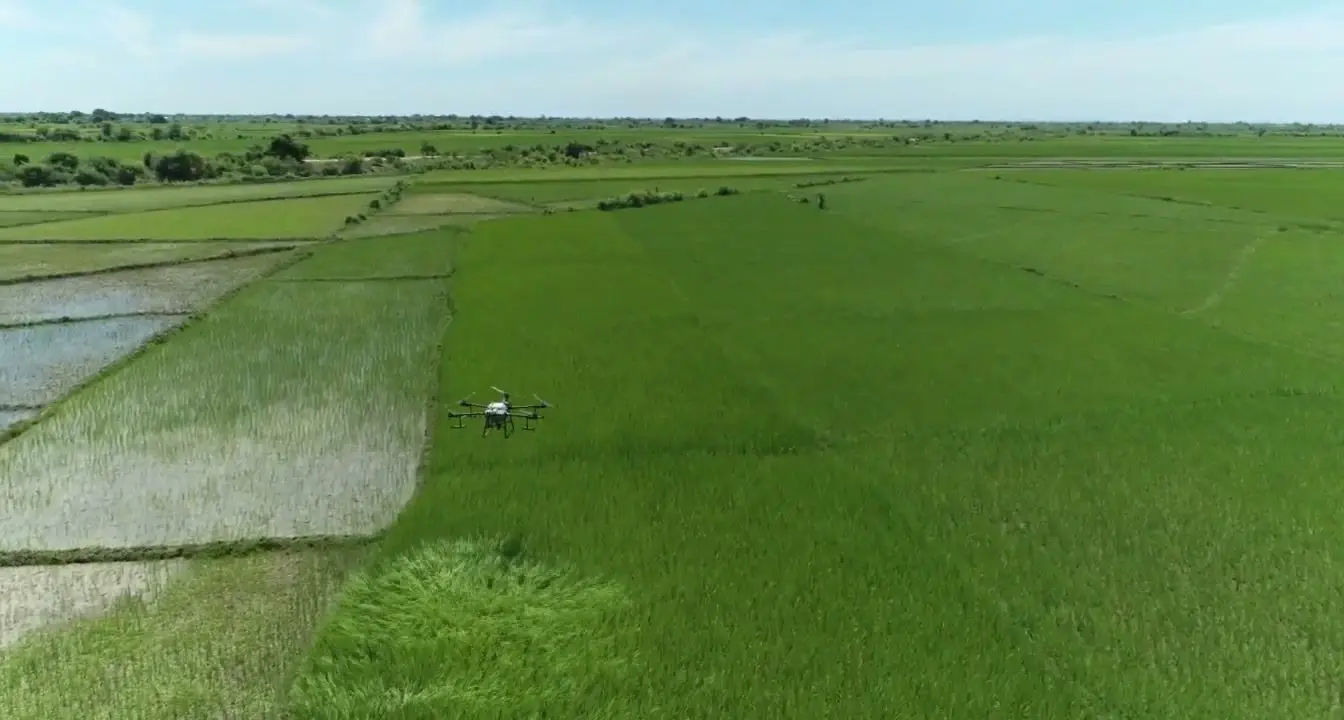
For the PMI VectorLink programme, funded by the President's Malaria Initiative (USAID) and run by Abt Associates, AerialMetric mapped mosquito larval habitats around villages by drone, then treated them by drone with a biological larvicide, Bti (Bacillus thuringiensis israelensis).
- Map. Around the main village of each selected fokontany, an area of about 500 hectares is photographed at high resolution.
- Delineate. On these images we outline the larval habitats and calculate their surface area. The programme's entomologists validate the areas to be treated.
- Treat. Spraying drones treat the validated habitats, twice a month during the campaign.
- Report. Flight permits, day-by-day planning validated with the programme, a report for each campaign.
Programme summary
- Period
- 2021-2023
- Client
- Abt Associates, which runs the PMI VectorLink programme
- Funded by
- President's Malaria Initiative (USAID)
- Areas
- Ankazobe (Analamanga) and Morombe (Atsimo-Andrefana) districts; 39 fokontany in the first phase, 17 in Morombe in 2022-2023
- AerialMetric's role
- Larval habitat mapping, flight permits, drone spraying, reporting
- Product
- Bti biological larvicide
Against locusts: what we offer
Preventive locust control relies on surveying breeding areas, which is slow and costly, and on aerial treatment by helicopter, which takes time to mobilise. In support of the national system, drones show where to survey first and, once approved, allow targeted treatment at a reduced dose.
Monitor: know where to look
High-resolution mapping, with our long-range S330 drone, of areas suitable for breeding, which turn green after the rains. Risk maps guide survey teams and are checked against ground truth.
Treat: precisely, with less product
Agricultural drones fitted with ultra-low-volume (ULV) atomisers. Compatibility is checked product by product, biopesticides included, in line with product approvals. Only confirmed infestations are treated; dose and drift are measured.
A method already in use
Map, target, treat, report: the PMI VectorLink method, to be transferred to the national control teams.
What our fleet can treat
- 16 ha/h
- per spraying dronemaximum capacity in favourable conditions
- 1,280 ha/day
- with 10 drones, our current fleet8-hour flying day
- 3,840 ha/day
- with a fleet expanded to 30 drones8-hour flying day

Start with a monitoring pilot
- 01
Choose the area
An accessible area with a history of locust activity, just after the rains; a target area and a control area, chosen with the national teams.
- 02
Fly
Two to three days of S330 flights with an optical payload, from a single base.
- 03
Deliver
High-resolution orthophoto, map of greening and suitable areas, performance note: resolution, area covered per day, turnaround.
- 04
Compare
Results validated against the national teams' ground truth; speed, cost and effectiveness compared with current means. The pilot does not promise to find hopper bands if there are none: its value does not depend on locusts being present.
- 05
Then treat
Ground characterisation of the atomiser's droplets, to the control organisations' parameters, before any real treatment. After technical, regulatory and environmental approval, a service supporting the national preventive control system.
Tell us about your programme
Vector or locust control: by phone, on WhatsApp or through the contact form.
Contact usThis page as a one-pager
To print or attach to a file.
Download (PDF)